Portland Kids Cooking Camps: Worth the Price?
12+ Portland cooking camps for kids in 2026, from $275 to $500/week. What they actually teach, which ones are worth the price, and age-by-age recommendations.
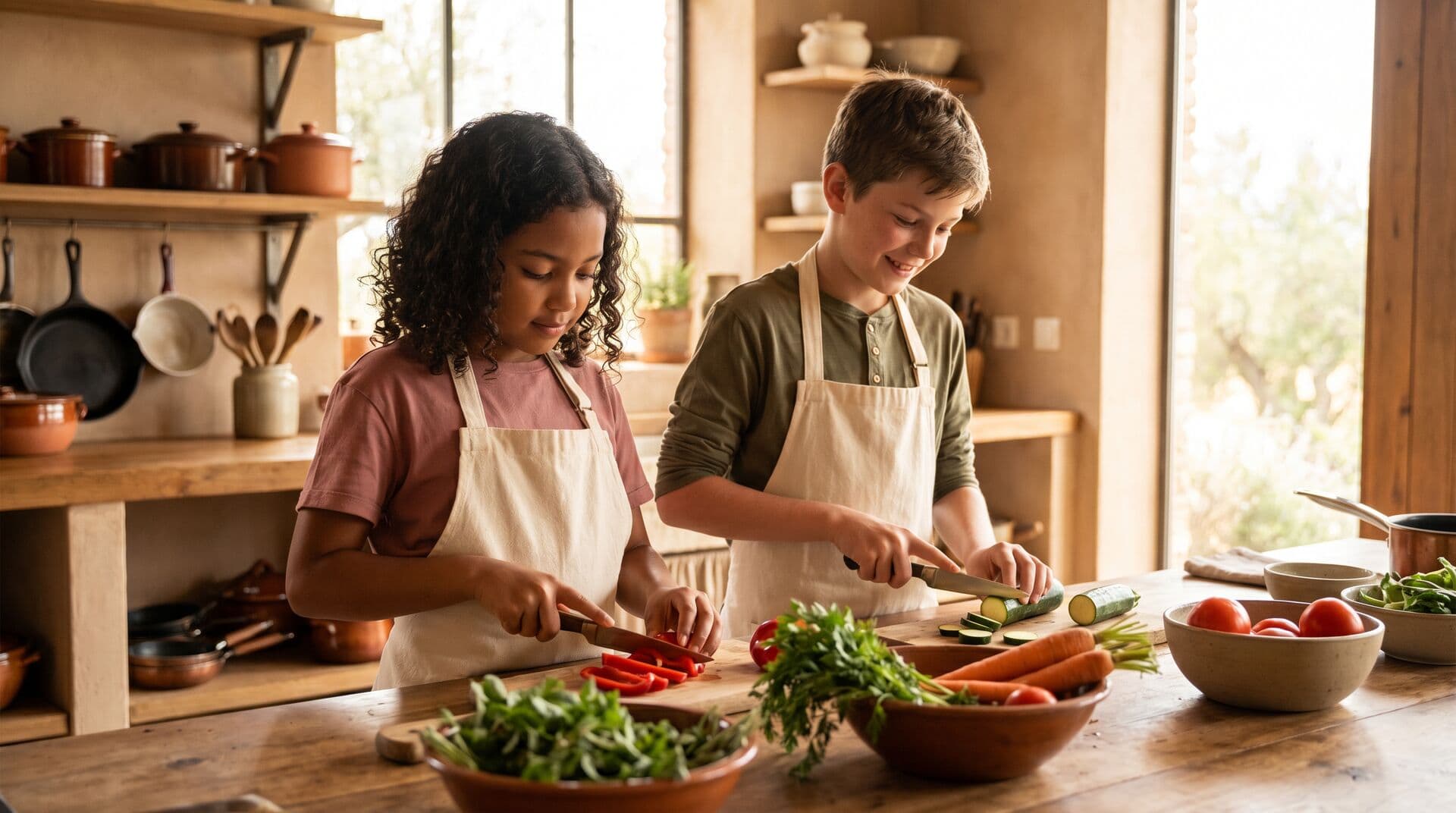
Portland is a food city. It has more food carts per capita than almost anywhere in the country. It has James Beard Award-winning chefs. It has a culture that takes food seriously in a way that most American cities don't.
The kids cooking camp ecosystem reflects this. Based on our review of 234 Portland-area camps, cooking programs stand out as some of the most underrated options available. They're worth considering even if your kid has never expressed interest in cooking, because the skills they develop are not just culinary. They're organizational, social, and deeply practical in ways that carry into adulthood.
If you're new to the camp search process, cooking camps are a strong first pick. They're low-pressure, high-reward, and almost universally enjoyable for kids across age groups.
Key Takeaways
- Portland cooking camps range from $275 to $500 per week, with community center programs starting even lower.
- Kids who participate in hands-on cooking programs show a 25% increase in willingness to try new foods (Journal of Nutrition Education and Behavior, 2020).
- Cooking camp develops math, sequencing, and executive function skills alongside culinary techniques.
- Portland Cookshop is the strongest dedicated option for grades 1-6; PCC youth programs serve career-minded teens.
- Portland's farm-to-table culture gives local cooking camps a curricular advantage most cities can't match.
What portland cooking camps are available?
Portland's cooking camp market is smaller than its sports or arts categories but surprisingly well-developed for a mid-size metro. Weekly prices range from roughly $275 at community center programs to $500 for specialty culinary instruction, based on ProjectKids listings data (2026). Here's a quick comparison of the main options.
| Program | Ages | Price | Schedule | Best For |
|---|---|---|---|---|
| Portland Cookshop | Grades 1-6 | $$ | 9am-3pm, summer + no-school days | Hands-on cooking with real recipes |
| PCC Youth Programs | High school | $$$ | Varies by term | Teens serious about culinary careers |
| Community center classes | Varies (6-14) | $ | Half-day, seasonal | Budget-friendly intro to cooking |
Prices shift year to year. Check our Portland camp cost breakdown for current ranges across all camp categories.
Portland offers cooking camps ranging from $275 to $500 per week, with Portland Cookshop anchoring the market for elementary-age children and PCC Youth Programs serving career-oriented teens. Community center programs provide the most affordable entry point, according to ProjectKids's review of 234 Portland-area camps (2026).
What makes portland cookshop stand out?
Portland Cookshop in NW Portland is the anchor of Portland's kids cooking camp scene. They run no-school day camps and summer camps for grades 1-6, 9am-3pm. Kids cook actual food, not just "make a snack" activities, but real recipes with real techniques.
The reviews are consistently strong. Parents report that kids come home with actual skills and, more importantly, with confidence in the kitchen. The camp is small enough that kids get real instruction rather than just watching a demonstration.
Small class sizes matter here. When a kid is learning knife skills or managing a hot pan, you want an instructor who notices them. Portland Cookshop keeps ratios tight enough that this happens naturally.
What do kids actually learn at cooking camp?
A 2020 study in the Journal of Nutrition Education and Behavior found that children who participated in hands-on cooking programs showed a 25% increase in willingness to try new foods and a measurable improvement in diet quality (Journal of Nutrition Education and Behavior, 2020). But the benefits go well beyond nutrition. Cooking camps teach transferable skills that show up in school, at home, and eventually in independent living.
Knife skills (age-appropriate). Younger kids start with butter knives and soft vegetables. Older kids work with real chef's knives under supervision. The progression is deliberate. By the end of a week, most kids can safely dice an onion. That's not nothing.
Measurement and math. Doubling a recipe is fractions in disguise. Kids who groan at math worksheets will happily calculate that half of 3/4 cup is 6 tablespoons, because the result is edible. Cooking makes abstract math concrete and immediate.
Following multi-step instructions. A recipe is a sequential process. Miss a step, and the result changes. This is the same executive function skill that teachers beg kids to develop. Cooking reinforces it without feeling like homework.
Food safety and hygiene. Cross-contamination, handwashing, temperature awareness. These are practical life skills that kids internalize quickly when they understand the "why" behind them.
Taste and flavor development. Kids learn to season, to taste as they go, to adjust. This builds a sensory vocabulary that most adults never develop. It also makes kids far more willing to try new foods at home. In our experience reviewing parent feedback across Portland camps, this is the benefit that surprises families most. Parents consistently report that their picky eater came home willing to try vegetables they'd refused for years.
Children who participate in hands-on cooking education show a 25% increase in willingness to try new foods, according to a 2020 study published in the Journal of Nutrition Education and Behavior (JNEB, 2020). Cooking camps also reinforce math, sequencing, and executive function skills through recipe-based learning.
Why are cooking camps worth considering?
The American Camp Association reports that 92% of campers say camp helped them feel good about themselves (ACA, 2023). Cooking camps deliver that confidence in a uniquely tangible way: kids make something real, serve it to others, and get immediate positive feedback.
The case for cooking camps is not primarily about culinary skills. It's about the other things that cooking teaches: following multi-step instructions, understanding cause and effect (what happens when you add too much flour), working with your hands, and the satisfaction of making something that other people eat and enjoy.
For kids who struggle with traditional academic subjects, cooking camps often provide a context where they can succeed and feel competent. The kid who has a hard time sitting still in a classroom can often focus intensely when they're making something with their hands.
For kids who are already confident academically, cooking camps provide a different kind of challenge. One that's sensory, physical, and immediately rewarding in a way that math homework is not. We've found that parents often underestimate how much their child will enjoy cooking camp because they view it as a "lesser" option compared to STEM or sports. But the developmental payoff is just as real, and often more immediately visible at home.
How does portland's food culture shape its cooking camps?
According to the USDA Farm to School Census, Oregon ranks among the top five states for farm-to-school program participation, with over 70% of school districts incorporating local food sourcing (USDA, 2023). Portland's cooking camps benefit directly from that same local food infrastructure.
Portland's food cart culture is a legitimate career pathway, and several Portland cooking camps have started incorporating food entrepreneurship into their curriculum. Not just how to cook, but how to think about food as a business. For older kids (middle school and up), this is a genuinely interesting angle.
But the connection goes deeper than food carts. Portland's farm-to-table culture is real and accessible to kids in a way it isn't in most cities. The Portland Farmers Market runs year-round. Farms like Sauvie Island operations are a short drive from any Portland neighborhood. Local restaurants source from growers that kids can actually visit.
Some cooking camps take advantage of this. Programs that incorporate trips to farmers markets or local farms give kids context for where ingredients come from. That context changes how kids think about food. It's the difference between "vegetables are boring" and "we picked these tomatoes this morning and now we're making sauce."
Portland also has a culture of food accessibility and diversity that shapes camp curricula. Kids in Portland cooking camps are more likely to learn to make pupusas, pho, and tamales alongside mac and cheese. The city's food scene is genuinely multicultural, and the better cooking programs reflect that.
Oregon ranks among the top five U.S. states for farm-to-school program participation, with over 70% of school districts incorporating local food sourcing (USDA Farm to School Census, 2023). Portland cooking camps build on this infrastructure by incorporating farmers market trips and local ingredient sourcing into their curricula.
What else is available beyond portland cookshop?
Beyond Portland Cookshop, several Portland community centers run cooking programs for kids. The Multnomah County Library has periodic cooking programs. Some Portland elementary schools run after-school cooking clubs.
Community center programs are often the most affordable option. They tend to run shorter sessions (half-day, one week) and work well as an introduction for younger kids or families testing the waters.
For older kids interested in serious culinary training, Portland Community College and Oregon Culinary Institute both run youth programs. These are more intensive than summer camps and appropriate for high schoolers who are seriously considering culinary careers.
FAQ
What age is best for cooking camp?
Most Portland cooking camps accept kids starting around age 6 or grade 1. That's a solid starting point. Younger kids focus on measuring, mixing, and simple assembly. By age 8-9, most kids are ready for supervised knife work and stovetop cooking. There's no "too late" to start; older kids pick up techniques quickly and often get more out of a single session than younger campers do over multiple weeks.
Are cooking camps safe? my kid is young.
Yes. Reputable cooking camps have strict safety protocols for every age group. Young kids don't use sharp knives or open flames. Equipment is age-appropriate, and instructor ratios are typically lower than in general-activity camps because the work requires closer supervision. Burns and cuts are rare. Ask the specific program about their safety procedures before enrolling. Any good program will answer these questions eagerly.
Can cooking camp accommodate food allergies?
Most Portland cooking camps will work with common allergies (nut-free, gluten-free, dairy-free) if you communicate them in advance. Some programs modify recipes for the whole group; others prepare alternatives for individual kids. Severe allergies require a direct conversation with the program director. Don't just note it on the registration form. Call or email, confirm the plan, and make sure the instructors (not just the front desk) know about it.
How much do portland cooking camps cost?
Portland cooking camps range from roughly $275 to $500 per week depending on the program and age group. Community center classes tend to be the most affordable at under $200 for half-day sessions. Portland Cookshop falls in the mid-range. PCC and Oregon Culinary Institute programs for teens run higher. For a full cost comparison across all Portland camp types, see our camp cost guide. Scholarships and financial aid are available at several programs.
Sources
Planning your kid's whole summer?
Don't piece it together one camp at a time. Tell us your weeks and kids' ages, and we'll build a week-by-week plan that fills every week — free, no account needed to start.
Related Articles

Portland Theater Camps for Kids Who Need the Stage
Not all theater kids are the same. Some crave the spotlight, others prefer building sets. We help Portland parents navigate the summer and after-school theater camp scene to find the perfect fit.
Portland Swim and Water Safety Programs: Summer Planning for
Summer in Portland means water, and for nervous parents, that means swim lessons. This guide cuts through the noise to help you find the right program for your kids, from cautious beginners to confident swimmers.
Portland Sports Camps for Kids Who Are Not Travel-Team Kids
Your kid loves to run, jump, and throw, but you're not ready for the year-round commitment and expense of club sports. Here's how to find Portland sports camps that prioritize fun and movement over trophies.